
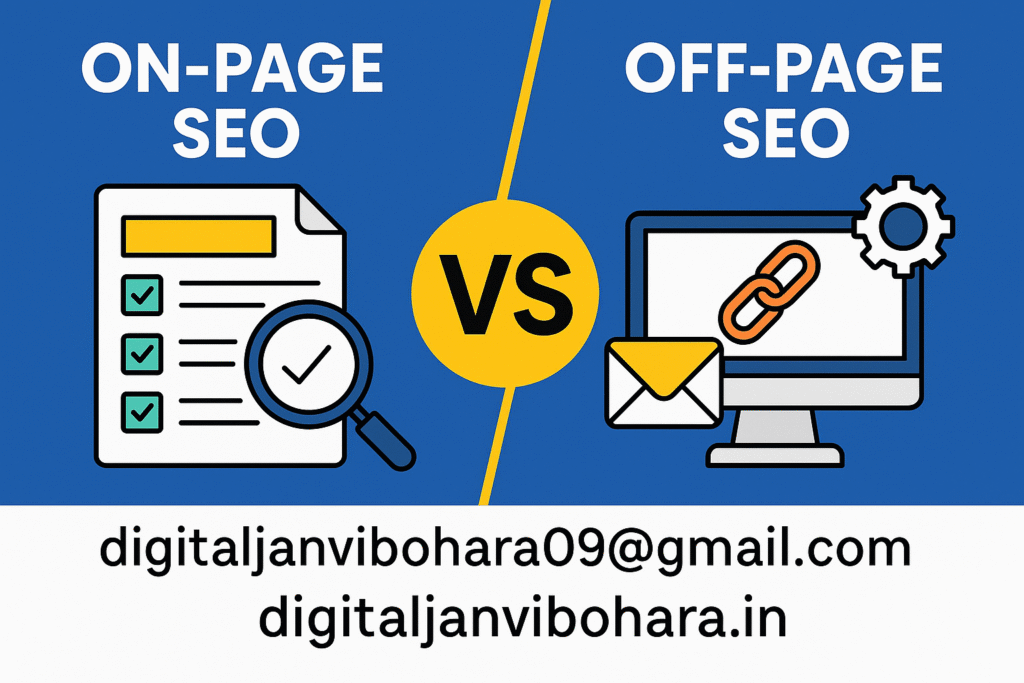
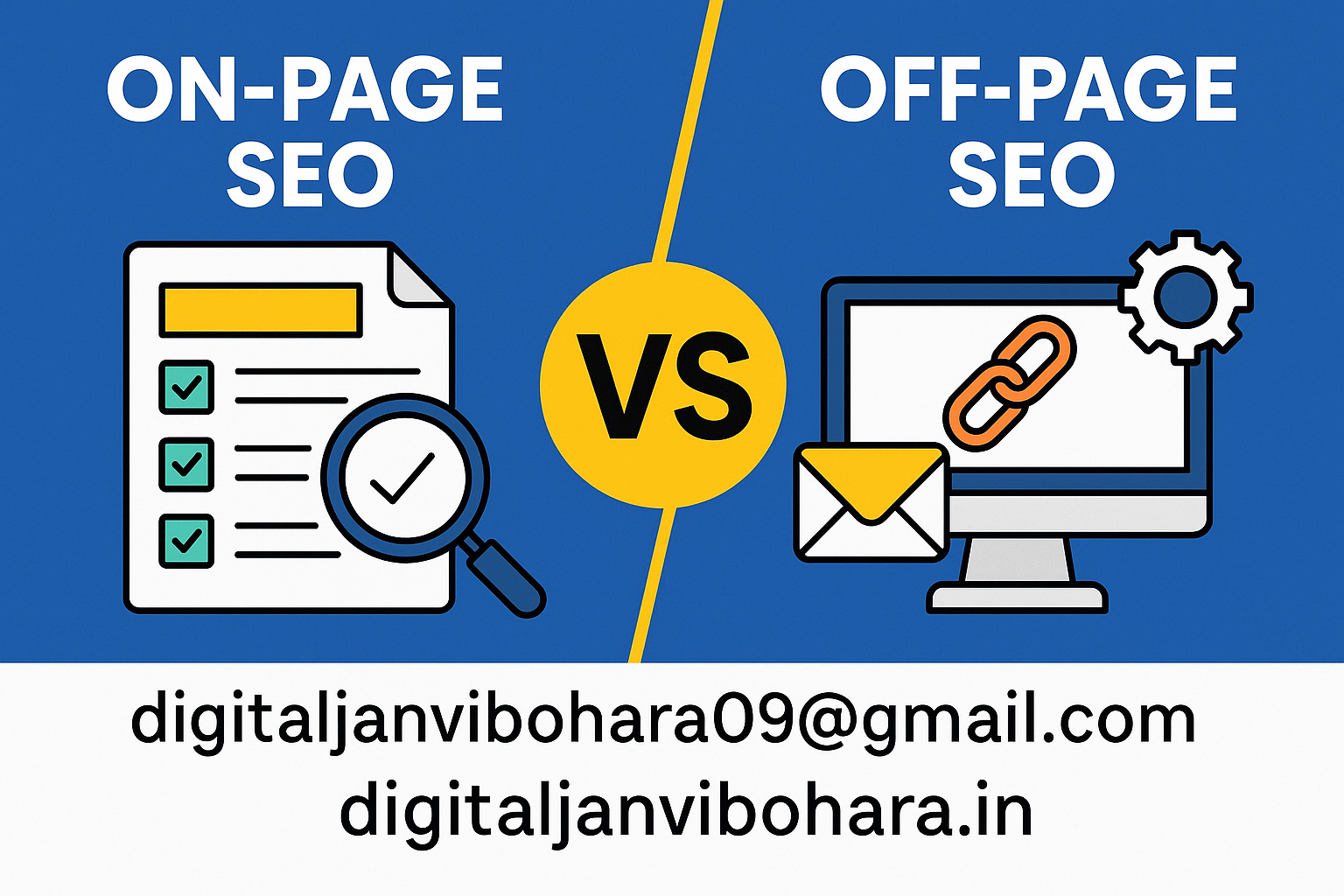
Introduction
In today’s competitive digital landscape, every business is fighting for visibility on search engines like Google. With millions of websites competing for the same audience, Search Engine Optimization (SEO) has become the backbone of online success. Without a proper SEO strategy, even the best-designed website or the most valuable content may remain invisible to your target audience.
However, beginners often get confused between On-Page SEO and Off-Page SEO—two essential pillars of optimization that work together but serve different purposes. While both aim to improve your rankings and drive traffic, the way they contribute to SEO success is quite different.
- On-Page SEO is about optimizing everything within your website that you control. This includes your content quality, keyword placement, meta tags, site speed, mobile responsiveness, and internal linking structure. Think of it as making your website as clear, relevant, and user-friendly as possible so that search engines and visitors can easily understand what your site is about.
- Off-Page SEO, on the other hand, is about building your website’s reputation, authority, and trustworthiness outside of your own domain. This is achieved through activities like link-building, social media engagement, guest posting, and brand mentions. It’s like how people talk about your business outside your store—the stronger your reputation, the more likely search engines are to trust and rank you higher.
What is On-Page SEO?
On-Page SEO (also called on-site SEO) refers to the practice of optimizing your website’s content and structure to make it search engine-friendly.
Key Elements of On-Page SEO:
- Keyword Optimization – Using primary and secondary keywords strategically.
- Title Tags & Meta Descriptions – Writing compelling, keyword-rich snippets.
- Header Tags (H1, H2, H3) – Structuring content for readability and SEO.
- URL Structure – Keeping URLs clean, short, and keyword-focused.
- Content Quality – Creating valuable, unique, and engaging content.
- Internal Linking – Linking to other relevant pages within your site.
- Image Optimization – Compressing images, using ALT tags, and descriptive filenames.
- Mobile Friendliness – Ensuring responsive design across devices.
- Page Speed – Fast-loading websites reduce bounce rates.
- User Experience (UX) – Easy navigation, readability, and site structure.
What is Off-Page SEO?
Off-Page SEO (also called off-site SEO) refers to activities done outside your website that help improve authority, trust, and search engine rankings.
Key Elements of Off-Page SEO:
- Backlink Building – Acquiring quality links from authoritative websites.
- Social Media Signals – Engaging audiences on platforms like Instagram, LinkedIn, Twitter, etc.
- Guest Posting – Publishing content on other sites with backlinks.
- Influencer Outreach – Collaborating with influencers for brand mentions.
- Brand Mentions – Earning references and discussions on forums, blogs, and news sites.
- Online Reviews & Reputation Management – Building trust through positive feedback.
- Content Promotion – Sharing blogs, infographics, and videos to attract links.
- Local SEO (Citations & Listings) – Optimizing business listings like Google Business Profile
On-Page SEO vs Off-Page SEO: Key Differences
| Aspect | On-Page SEO | Off-Page SEO |
|---|---|---|
| Focus | Website’s internal elements | External factors outside the website |
| Control | 100% under your control | Relies on external sources |
| Techniques | Keywords, content, internal linking, meta tags | Backlinks, guest posts, social shares |
| Goal | Improve relevance & user experience | Build authority & trust |
| Timeframe | Faster to implement | Takes longer to see results |
| Example | Optimizing a blog with keywords | Earning backlinks from high DA blogs |
Why You Need Both On-Page and Off-Page SEO
- On-Page SEO ensures search engines understand your content.
- Off-Page SEO ensures search engines trust your content.
Without the right balance, your SEO strategy will remain incomplete.
Think of it like this:
- On-Page SEO = Your shop’s design & products.
- Off-Page SEO = Word-of-mouth & customer reviews.
Both together attract more visitors and increase credibility.
How to Balance On-Page & Off-Page SEO for Success
1. Start with Strong On-Page SEO
Before focusing on Off-Page SEO, you must have a solid foundation. If your website isn’t optimized internally, even the best backlinks won’t help much.
- Optimize Website Speed: A slow site frustrates users and increases bounce rates. Use tools like Google PageSpeed Insights or GTMetrix to analyze and fix speed issues.
- Keyword Optimization: Research relevant keywords with tools like SEMrush, Ahrefs, or Ubersuggest and strategically place them in titles, headers, meta tags, and content.
- Website Structure & Navigation: A clear structure with proper categories, menus, and internal linking helps both users and search engines navigate easily.
- Mobile Optimization: Ensure your website is mobile-friendly since most searches happen on mobile devices.
2. Publish High-Quality Content Regularly
Content is the core of both On-Page and Off-Page SEO. Without valuable content, you won’t rank or attract backlinks.
- Types of Content to Publish:
- Blog posts (how-to guides, listicles, comparisons)
- Case studies & research reports
- Infographics (shareable visuals)
- Videos, podcasts, and webinars
- Consistency Matters: Publishing one blog a month won’t help much. Instead, aim for a content calendar that keeps your audience engaged.
- Content Depth: Create long-form, comprehensive articles (1500+ words) with actionable tips. These tend to rank higher and get more backlinks
3. Build Quality Backlinks, Not Quantity
Backlinks remain one of Google’s strongest ranking signals—but not all links are created equal.
- Focus on High-Authority Domains: A single backlink from Forbes, HubSpot, or Neil Patel’s blog carries more weight than dozens from low-quality blogs.
- Methods to Build Backlinks:
- Guest posting on niche-relevant sites
- Broken link building (replace dead links with your content)
- HARO (Help A Reporter Out) for media mentions
- Collaborating with influencers and industry experts
- Avoid Spammy Links: Buying links or relying on link farms can result in Google penalties.
4. Leverage Internal + External Linking
Links not only help SEO but also improve user experience.
- Internal Linking: Connect your blog posts and pages to each other strategically. Example: A blog on “SEO Basics” can link to another blog on “Keyword Research.” This distributes link equity and keeps visitors engaged.
- External Linking: Linking to authoritative sources (like Google, HubSpot, or industry publications) adds credibility to your content and helps Google understand your niche
5. Promote Your Content
Even the best content won’t get noticed unless you promote it.
- Social Media Promotion: Share blogs, infographics, and videos across platforms like LinkedIn, Instagram, Twitter, and Facebook.
- Email Marketing: Send newsletters featuring your latest posts to subscribers.
- Communities & Forums: Engage in platforms like Quora, Reddit, Medium, and niche Facebook groups. Share insights and link back when relevant.
- Repurposing Content: Turn a blog into an infographic, a video, or even a podcast episode to reach wider audiences.
6. Monitor SEO Performance
Tracking results ensures you’re on the right path and helps adjust strategies.
- Tools to Use:
- Google Analytics – track traffic, engagement, and conversions.
- Google Search Console – monitor keyword rankings and indexing issues.
- Ahrefs/SEMrush – analyze backlinks, competitor performance, and keyword opportunities.
- Key Metrics to Track:
- Organic traffic growth
- Bounce rate & dwell time
- Backlink profile quality
- Keyword ranking improvements
- Conversion rate from organic traffic
7. Stay Updated with SEO Trends
SEO is dynamic—Google makes hundreds of algorithm changes each year.
- Stay Informed Through Trusted Sources: Follow blogs like Search Engine Journal, Moz, Ahrefs, and Neil Patel.
- Voice Search Optimization: More people use voice assistants like Alexa & Siri—focus on conversational keywords.
- AI & SEO: Google is leaning more on AI-driven ranking factors (e.g., EEAT: Experience, Expertise, Authoritativeness, Trustworthiness).
- Core Web Vitals: Optimize user experience factors like page speed, interactivity, and layout stability.
Conclusion
Both On-Page SEO and Off-Page SEO are like two sides of the same coin. On-Page helps search engines understand your website, while Off-Page proves its authority. To achieve long-term ranking success, you need to balance both strategies smartly—optimize your content for users and search engines, while building trust and authority beyond your site.